
Ben Chapman

About Ben Chapman

Dr. Ben Chapman is a professor and food safety extension specialist at North Carolina State University. As a teenager, a Saturday afternoon viewing of the classic cable movie, Outbreak, sparked his interest in pathogens and public health. With the goal of less foodborne illness, his group designs, implements, and evaluates food safety strategies, messages, and media from farm-to-fork. Through reality-based research, Chapman investigates behaviors and creates interventions aimed at amateur and professional food handlers, managers, and organizational decision-makers; the gate keepers of safe food. Ben co-hosts a biweekly podcast called Food Safety Talk and tries to further engage folks online through Instagram, Twitter, Facebook, YouTube and, maybe not surprisingly, Pinterest. Follow on Twitter @benjaminchapman.

Ill employee linked to celebrity chef’s restaurant outbreak?

Famous chefs seem to have the same problem as mere mortals when it comes to having food handlers show up to work ill. It’s a bad idea and a risk factor for foodborne illnesses. In 2009, Heston Blumenthal’s fancy pants Fat Duck restaurant was linked to a massive norovirus outbreak. A report in Epidemiology and Infection concluded that 591 people were sickened, the restaurant failed to notify public health types as dozens of complaints poured in, hired its own food safety consultant, did a deep clean, and then temporarily closed.

Heston blamed the oysters; public health officials fingered ill employees.

An ill employee mighta, sorta, be the source of another celeb chef outbreak, according to health officials. This time in George Calombaris’ restaurant Hellenic Republic in Melbourne. According to Mail Online, After 90 reported illnesses in May (initially thought to be Salmonella, but confirmed as norovirus) after eating Mothers’ Day meal at the restaurant.article-2631159-1DEF6E5300000578-414_634x358
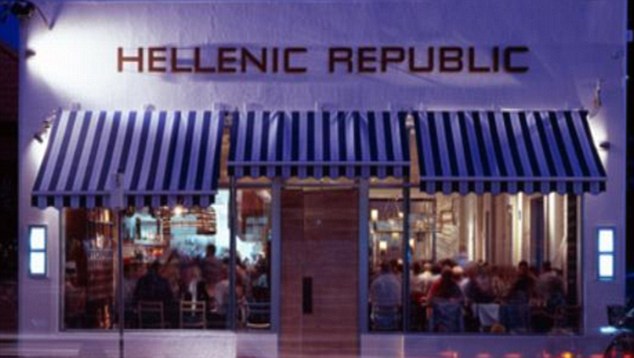
Health Department spokesman Bram Alexander said the department’s tests determined norovirus, a common and highly contagious cause of gastroenteritis, as the cause of the illness.

‘Of the 300-plus diners we interviewed, around 90 reported illness, which could have been associated with eating at Hellenic Republic Kew,’ Mr Alexander said.

Mr Alexander added it was ‘likely’  to have come from an infected food handler at the restaurant.

Mr Calombaris, a co-owner of the restaurant, previously issued a statement saying his Kew team had been ‘absolutely devastated by the recent events’.

‘I am so sorry for those poor people that have been affected and to those inconvenienced by us taking precautionary measures and closing down the venue,’ he said.


‘We are confident in our procedures and standards of hygiene and the welfare and enjoyment of our guests has always been and will continue to be our highest priority.’
 
‘Although there is no evidence as to the cause of this, we are working closely together with Boroondara Council and health authorities to discover the cause,’ she said.
 
It’s all so confusing; is it an ill employee, or something else (like a vomit event in the restroom that someone dragged back to the kitchen)?

North Carolina cantaloupe packinghouses invest in infrastructure for food safety

Following 2011’s tragic Listeria-in-cantaloupe outbreak linked to Jensen Farms and a 2012 Listeria-prompted recall, the U.S. Food and Drug Administration (FDA) issued a letter detailing inspection visits to U.S. cantaloupe packinghouses:cantaloupe_salmonella(25)

Because the recent outbreaks have been traced to domestic cantaloupe packinghouses, during the 2013 growing season, we intend to initiate inspections with a sampling component at a subset of the cantaloupe packinghouses in the United States.  The aim of these inspections is in part, to assess the current practices by this segment of the produce industry and to identify insanitary conditions that may affect the safety of cantaloupe destined for distribution to consumers.

In preparation for the inspections, and partnering with colleagues at the North Carolina Department of Agriculture and food safety friends in other states we put together a series of workshops and on-farm assessments. Michelle Danyluk and I even wrote a fact sheet on how to use sanitation to establish a clean break and define a lot in pack facilities.  FDA carried out multiple visits and took hundreds of samples. Although a full report hasn’t been released, some information trickled out and the industry took note.

According to The Grower, many North Carolina cantaloupe producers have upgraded facilities, infrastructure and sanitation protocols.

Last year at the end of the season, Southeastern Growers Association, Kenly, N.C., updated its cantaloupe packing line to all-stainless steel and this year is the first season that the company is using the new equipment.

Other companies are making similar changes to ensure the safety of their product. In 2013, Jackson Farming Co. transformed its open packing shed to an enclosed cantaloupe packing facility.

“Our job in the industry is to make changes when needed and learn how our practices could affect this industry,” said Matt Solana, vice president of operations and supply chain at Jackson Farming Co.

T.C. Smith Produce, Seven Springs, N.C., also completed a new stainless steel cantaloupe packing line in its cantaloupe packing room and used it for the first time last season.

The company wanted to improve food safety any way that they could. 

“We will continue to make adjustments as new scientific information becomes available,” said Solana. “The bottom line is that we want to continue growing and selling cantaloupes and we want to make them as safe as they can be.”

Royal Hawaiian resort linked to over 100 illnesses

With the mid-season finale of my current favorite television show, Mad Men, less than an hour away, I’m preparing with some wine, happy that I’m not suffering with norovirus like over 100 guests of the Royal Hawaiian. Featured in Season 6 the Royal Hawaiian was the inspiration for one of Don Draper’s magical pitches – the hotel is an experience.

But probably not like barfing and puking.Mad_Men_Hamm_Pare_Waikiki_Beach_Courtesy_AMC*304

According to the Global Dispatch, an norovirus has swept it’s way through the resort.

Royal Hawaiian general manager, Kelly Hoen, apologized for the unpleasant situation, “We at the Royal Hawaiian are very sorry for having many of our guests and several of our associates that have gotten ill with the norovirus.”

Hawaii health officials confirmed norovirus. Hawaii state epidemiologist, Dr. Sarah Park said in an interview with KITV, “It’s a very hearty sort of virus that it can stick around in the environment and be resistant to normal antiseptic kind of sanitation-type solutions. Park went on to say that someone not necessarily contaminated food at the hotel, but since several employees were sickened, kitchen surfaces and dishware likely got contaminated.

Hoen said the hotel has cleaned and sanitized public areas, restrooms, kitchen and guest rooms at the hotel.

30 ill with salmonellosis in linked to Fuego’s Tortilla Grill in College Station, Texas

Brazos County, Texas is back in the food safety news again. A year after the famed taco-eating press conference (Since everybody, I’m sure, would want to know the name of the restaurant, I went by there right before I came. I got a beef taco, so here it is.”) the Brazos County Health Department has connected 30 cases of Salmonella Typhimurium Ohio to a Fuego’s Tortilla Grill. According to WTAW,  a specific food source has yet to be identified but multiple food samples tested positive for the outbreak strain. l

Through the course of the food borne outbreak investigation, Fuego’s Tortilla Grill Restaurant became of statistical significance. Environmental samples were obtained from the restaurant 05/13/2014.

Today, the DSHS Laboratory reported that 4 of the 36 samples obtained from the restaurant tested positive for Ohio strain. A specific exposure source, such as food handling procedures, food supply or an infected employee has not been specifically identified, but is currently under investigation.

BCHD is working very closely with Fuego’s Restaurant to find the source of bacteria, and how to prevent this type of event from recurring. Fuego’s Restaurant’s management has been cooperative during this investigation, and has closed voluntarily today, when they received the news about the lab samples.

The Eagle, a College Station newspaper, also reported that Fuego’s Tortilla Grill had reopened following a through scrubbing.

“We’re owning up to this,” owner Paul Moler said following a news conference by the Brazos County Health Department. “We’re not a victim here.”

“All we can do is move forward, but I guarantee you Fuego will open its doors the best it’s ever been, and we will continue to give fresh, quality value at a great price. We’re not going to compromise. We’re not going to cut corners.”

On Friday, upon learning the results of the samples taken on May 13, Fuego voluntarily closed its doors for the day in order to clean and implement changes in food handling, as required by county health officials. Those requirements included a thorough cleaning of the premises by employees followed by an outside cleaning crew, the disposal of all open and prepared foods, as well as all cutting boards — some of which had tested positive for the bacteria.

“This happens,” Sullivan said, noting that Salmonella is a common bacteria found in most kitchens. “This happens with well-intentioned restaurants doing the best they can, so we work together … to come up with best practices and to learn from these types of things.”

Salmonella may be common in kitchens (especially on incoming ingredients and poorly washed hands of staff) but good restaurants have food safety management strategies to keep it off the plates of their patrons.

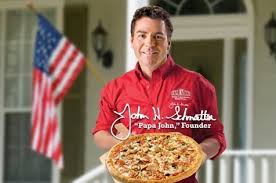
Wrong doses of IgG given following Papa John’s-linked hepatitis A exposure

Dealing with a hepatitis A event, even without illnesses, sounds like a headache. Between the lineups, paying for shots and bad press, things are messy.

And some of the management is out of a restaurant’s control.

Like administering the shots. WSOC-TV in Charlotte reports that some individuals who received post-exposure IgG shots for hepatitis A may have received the wrong dose.images-2

According to a Health Department spokesperson, “During the recent Hepatitis A vaccination clinics related to an ill worker at a Charlotte area Papa John’s, a small number of people were inadvertently given the incorrect dose of the vaccine. This means that in some cases an adult dose was given to a child or a child dose was given to an adult.”

Adults who received the child dose of the vaccine are being asked to return to the Health Department to receive the adult dose.

Red Robin has second hepatitis A incident in two weeks, this time in Missouri

Two weeks ago I wrote that I were a food business owner I’d be worried about hepatitis A.

Individuals can shed the virus without showing symptoms and even a Hep A positive handwashing superstar will result in lineups outside the business or at the health department while patrons get their post-exposure shots.RedRobinLogo1-300x214

Authors of a 2000 Journal of Food Protection paper on the cost effectiveness of vaccinating food handlers arrived at the conclusion that the public health benefit of vaccinating for hep A doesn’t outweigh the costs – but doesn’t factor in all the bad publicity, hassle and incident management costs. The stuff that a Stroudsburg, PA Red Robin restaurant is going through right now.

The corporate Red Robin folks must be working overtime, as an identical situation has popped up at a Missouri outlet of the chain. Same story, different location. According to USA Today, up to 5,000 may have been exposed to hepatitis A following after a food handler was diagnosed with the virus.

Health officials worry that as many as 5,000 people could have been exposed to hepatitis A at a Red Robin restaurant here after a worker was diagnosed with the virus.

Springfield-Greene County Health Department officials received a report Tuesday about the illness, which can affect the liver, and worked with state and federal officials to get enough vaccine shipped so people who went to the restaurant May 8 to 16 can be immunized.

The goal is to get as many customers vaccinated within 14 days of their possible exposure, officials said Wednesday. Otherwise, the shot won’t work, so they’ve set up clinics through the Memorial Day holiday weekend.

“Upon being informed of the incident, the Springfield Red Robin took all safety measures to ensure the well being of our guests and team members including arranging the inoculation of all Springfield team members with the immune globulin prophylaxis shot,” Red Robin Gourmet Burgers officials said in a statement.

Wonder how many incidents it takes for a company to tip the scales to benefit outweighing cost on providing or requiring food handlers to have a hep A vaccination.

Contaminated ground beef linked linked to E. coli O157:H7 outbreak

Food Safety Infosheet highlights:

– Wolverine Packing Company in Detroit has issued a recall of 1.8 million pounds of ground beef products marked with the establishment number of EST.2574B.

Screen Shot 2014-05-19 at 2.41.19 PM

– 11 ill including (2 hospitalizations) after eating at restaurants that served recalled beef.

– Cook all ground beef products (fresh and frozen) to 155ºF for 15 seconds or 160ºF. Use a tip-sensitive digital thermometer to check that food has reached a safe temperature.

– Communicate the risks of consuming undercooked beef to restaurant patrons. The information should include messages about consequences and pathogens.

This infosheet was generated as part of a large USDA grant focusing on reducing the risk of Shigatoxin-producing E. coli related to beef.

Eleven illnesses linked to undercooked beef served at restaurants; recall of 1.8 million pounds of meat

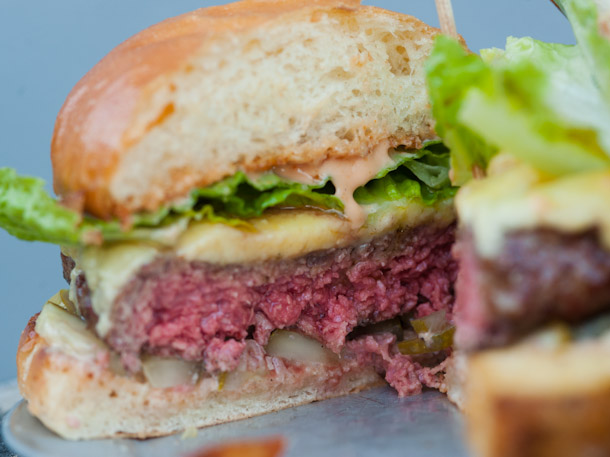
The practice of ordering undercooked hamburgers at a restaurant has always been sort of foreign to me. Literally. Growing up in Ontario (that’s in Canada) I was never offered a choice of how I wanted my hamburger cooked. In the U.S. undercooked ground beef is seen as a personal preference. The FDA Food Code says that a cooked hamburger reaches 160F (or 155F for 15 seconds) but the rules allow for restaurants to cook meats, including ground beef, how a patron wants it – with the caveat that they must inform the orderer of the risks.  20130103-fogcutter-3

Much of this risk communication is carried out on menus with a combination of asterisks, fine print and legalese.

Some restaurants ask people whether they want their burgers “pink or no pink” although it’s widely known in food safety circles that color is a lousy indicator.

A few servers engage patrons in a discussion about what the risk is – sometimes correctly, sometimes not. Our group is investigating some of these questions with the aim of having better communication and understanding as part of a large USDA grant focusing on reducing the risk of Shigatoxin-producing E. coli related to beef.

And many restaurants don’t serve undercooked burgers at all – likely because they are trying to avoid the situation that has unfolded over the past week: Eleven are ill in 4 states from E. coli O157. Reports point to undercooked ground beef at restaurants as a risk factor.

According to USDA FSIS,

Wolverine Packing Company, a Detroit, Mich. establishment, is recalling approximately 1.8 million pounds of ground beef products that may be contaminated with E. coli O157:H7, the U.S. Department of Agriculture’s Food Safety and Inspection Service (FSIS) announced today.

The ground beef products were produced between March 31, 2014 and April 18, 2014. For a full list of products that were recalled please see the attached document.

The products subject to recall bear the establishment number “EST. 2574B” and will have a production date code in the format “Packing Nos: MM DD 14” between “03 31 14” and “04 18 14”. These products were shipped to distributors for restaurant use in Massachusetts, Michigan, Missouri, and Ohio.

FSIS was notified of E. coli O157:H7 illnesses on May 12, 2014. Working in conjunction with public health partners from the Centers for Disease Control and Prevention (CDC), FSIS determined that there is a link between the ground beef products from Wolverine Packing Company and this illness cluster. Based on epidemiological and traceback investigations, 11 case-patients have been identified in 4 states with illness onset dates ranging from April 22, 2014 to May 2, 2014. FSIS continues to work with our state and federal public health partners on this investigation and provide updated information as it becomes available. 


Food Safety Talk 60: Pour maple syrup on it

Food Safety Talk, a bi-weekly podcast for food safety nerds, by food safety nerds. The podcast is hosted by Ben Chapman and barfblog contributor Don Schaffner, Extension Specialist in Food Science and Professor at Rutgers University. Every two weeks or so, Ben and Don get together virtually and talk for about an hour.  They talk about what’s on their minds or in the news regarding food safety, and popular culture. They strive to be relevant, funny and informative — sometimes they succeed. You can download the audio recordings right from the website, or subscribe using iTunes.

The guys start off the show discussing starting a food safety talk live morning show under the pseudonyms of Ace and Lefty. Ben tells Don that he’s watching an old Judd Aptow show, Undeclared  on Netflix. Don says he doesn’t even have time to watch Ben’s favorite Canadian show, the oft-mentioned The Newsroom. The guys then quickly celebrate their AARP episode birthday and talk about Ben’s dad love of medieval times and Medieval Times. Ben announces that he’s on his way to his hometown of Port Hope, Ontario (that’s in Canada) and will be watching Float Your Fanny Down the Ganny – a celebration commemorating a flood. Ben shares a recent dream that he had about the Conference for Food Protection and being uninvited.images-1

In outbreak flashblack Don and Ben talked about a 2004 Salmonella outbreak associated with sliced roma tomatoes sold through Sheetz gas station delis. The Sheetz outbreak was notable from a lawsuit  and communication standpoint. Although it looked at as a teachable moment, Don and Ben evaluated and critiqued the messages that the Partnership for Food Safety Communication put out at the time of the outbreak.

The guys then talked about a restaurant inspection media exposes and their impacts, Don and Ben agree that they don’t always get it right but have a place. Ben’s friends Jim Chan and Dominic Losito both retired Public Health Inspectors, pulled back the curtain on inspections on a CBC show, Marketplace – that Ben also appeared on in 2008. Their discussion continued to disclosing and translating restaurant inspection results for the masses. Don provided some insight into his ongoing Rutger’s cafeteria food safety project and the potential impacts of having extra outside eyes on running a kitchen — supplemented with micro sampling.

Ben then put Don to the test on a question he received on using vinegar as a sanitizer in a food business. Don passed the test.

In a short after dark, Don suggested a puzzle game, Monument Valley for Ben to check out.

Dear deer

Ashley Chaifetz, a PhD student studying public policy at UNC-Chapel Hill writes,

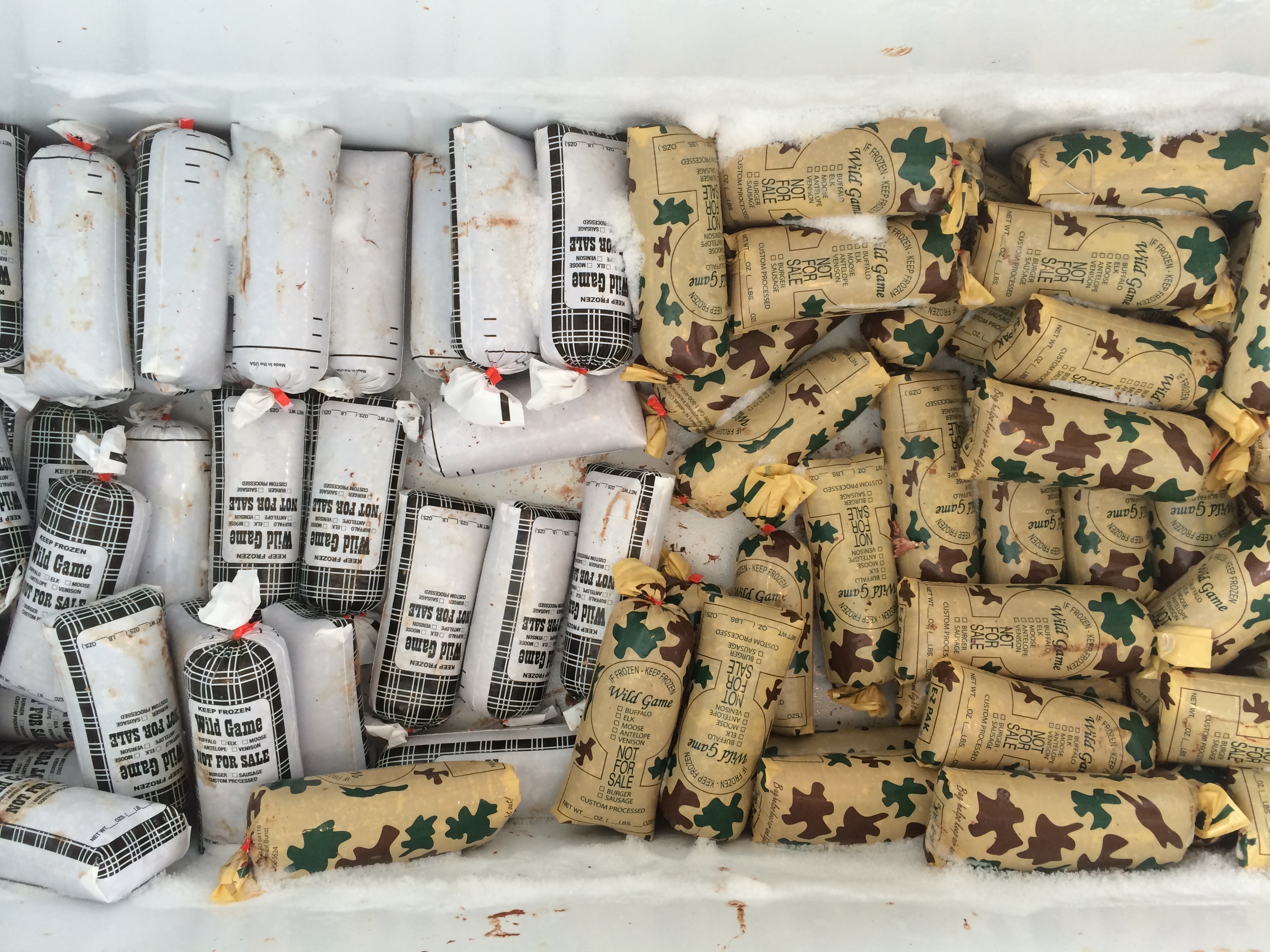
Government sharpshooters in Washington, DC shot 106 white-tailed deer in an effort to cull the population in Rock Creek Park to no more than 20 per square mile. The culled deer amounted to 3,300 pounds of hyper-local venison and was donated to homeless shelters and other emergency food providers in the area.2014-04-03 13.33.57

The National Park Service has the meat inspected and processed and then gives it to D.C. Central Kitchen. Using donated ingredients, the kitchen cooks and distributes 5,000 meals a day to community centers and shelters. “It would be really sad if the National Park Service had to kill all these deer and throw the meat away,” said Paul Day, a spokesman for D.C. Central Kitchen. In all, the National Park Service donated about 3,900 pounds of venison this year and last to D.C. Central Kitchen, which used the lean protein to make not only meatloaf and burgers but breakfast casseroles and chili.

Charities, like Farmers and Hunters Feeding the Hungry and Backyard Bow Pro, accept extra donated venison (as well as legally-hunted elk, antelope, and moose) from hunters. The organizations, in turn, process the carcass and have the meat inspected. While venison can carry Trichina, pathogenic E. coli and Salmonella, USDA’s Food Safety and Inspection Service requires that all meat slaughter plants conduct microbial tests for generic E. coli and Salmonella.

While venison might be a move away from the typical meat served in a homeless shelter, the hunted game aided in maintaining the park, feeding hungry families, and preventing food waste, all while ensuring the safety of the venison.