Produce, food safety culture and Brad Pitt

Brad Pitt toured Sydney Harbour and tried Vegemite, first time for the Missouri native.

I got to hang out at Darling Harbor in Sydney and chat with some Australian produce folks; some wanted to talk more, some wanted to throw me in the get.that.finger.out.of.your.ear.airplaneHarbour with concrete shoes.

Amy, my lovely and loving partner, quipped, “a typical Powell talk. Now get Sorenne ready and let’s go” or something like that.

(She’s actually a great counselor for my whines, anxieties and insecurities.)

I was speaking at the Australian Produce Marketing Association gabfest about food safety culture stuff.

I asked the delegates if they enjoyed the raw sprouts on their salad the night before, stated how many times I go to food safety things and get served raw sprouts (even in my own university) and suggested why that may not be a great idea.

(30 minutes after I was done talking, yet another sprout recall, this time Salmonella in Canada.)

I told them how we took the kid out to get some chips along Darling Harbor, and since they were served with aioli, I asked the server if the aioli was made with raw eggs (because Australia has a raw egg problem, most recently 140 sick in Canberra). She didn’t know but asked the chef, and the answer was yes.

I asked for tomato sauce instead (ketchup).

I complimented the Expo Center for having paper towels in the bathrooms, a rarity in Australia, but that the water flow was almost non-existent and two-darling.harbor.jun.13out-of-three sinks did not respond to the hand activation (vigorous water flow, rubbing and the friction of drying with paper towel are the key components of good handwashing).

I told them about a whole bunch of outbreaks, and one grower said I used scare tactics, and I said 33 people dying from eating rock melon (cantaloupe) wasn’t really a scare tactic, just what’s out there.

Like the 99 now sick from Hepatitis A in organic frozen berries.

I talked about food safety culture, tools like infosheets, repeated, rapid, reliable and relevant messages, about Frank and Chris and Ben and Amy and how they had all influenced my thoughts on the topic, but that to really seal the culture deal, growers and retailers had to brag about it.

I talked about the cantaloupe growers in California who have adopted some mandatory audit-inspection things, and all the problems and outbreaks that happen with places that have audits and inspections, and that big boys and girls take care of their own problems and get help when they need it.

I said how disappointed I was that as a consumer, there will be no label on these inspected cantaloupe, so as a consumer, I have no way of knowing whether a particular grower had even thought about microbiological food safety or was any good at it.

I tried to be triumphant and said, this isn’t a crisis, it’s an opportunity, for all you good Australian growers to get ahead of the curve, put in place the data collection and risk management efforts, the food safety culture, and go brag about it.

All the usual stuff.

And largely, the usual response.

I’m thankful for the opportunity to chat with growers and retailers – I always liked that – and thankful for the opportunity to clarify in my cobwebs a few things about what I should be doing.

But I’m no Brad Pitt.

I don’t want to be.

And get your finger out of the Vegemite. You don’t know where that finger’s been.


Kroger stops selling sprouts

Following WalMart two years ago and numerous food service firms several years ago, The Kroger Co. – a supermarket chain that operates a huge number of stores, including the Dillons in Manhattan, Kansas — today announced its decision to no longer sell sprouts due to its potential food safety risk.

“After a thorough, science-based review, we have decided to voluntarily discontinue selling fresh sprouts,” said Payton Pruett, Kroger’s vice president of food safety. “Testing and sanitizing by the growers and safe food handling by the consumer are the critical steps to protect against foodborne illness. Sprouts present a unique challenge because pathogens may reside inside of the seeds where they cannot be reached by the currently available processing interventions. Out of an abundance of caution, the Kroger Family of Stores will no longer sell fresh sprouts or procure other foods that are produced on the same equipment as sprouts.”

Pruett added that the company is open to revisiting this policy when new technologies and practices show that farmers can consistently produce sprout seeds that do not internalize pathogens, and when sprout processing environments can be enhanced for safety and cleanliness. 

Deliveries of sprouts into Kroger distribution centers and stores will be discontinued on October 22, 2012.

Kroger employs more than 339,000 associates who serve customers in 2,425 supermarkets and multi-department stores in 31 states under two dozen local banner names including Kroger, City Market, Dillons, Jay C, Food 4 Less, Fred Meyer, Fry’s, King Soopers, QFC, Ralphs and Smith’s.

After the German E. coli O104 outbreak that killed 53 people last year and sickened over 4,000, along with the ridiculous public statements and blatant disregard for public safety taken by sandwich artist Jimmy John’s in the U.S., we reviewed the sprout-related literature and concluded:

• raw sprouts are a well-documented source of foodborne illness;

• risk communication about raw sprouts has been inconsistent; and,

• continued outbreaks question effectiveness of risk management strategies and producer compliance.

We document at least 55 sprout-associated outbreaks occurring worldwide affecting a total of 15,233 people since 1988. A comprehensive table of sprout-related outbreaks can be found at http://bites.ksu.edu/sprouts-associated-outbreaks.

Erdozain, M.S., Allen, K.J., Morley, K.A. and Powell, D.A. 2012. Failures in sprouts-related risk communication. Food Control. 10.1016/j.foodcont.2012.08.022

http://www.sciencedirect.com/science/article/pii/S0956713512004707?v=s5

Abstract

Nutritional and perceived health benefits have contributed to the increasing popularity of raw sprouted seed products. In the past two decades, sprouted seeds have been a recurring food safety concern, with at least 55 documented foodborne outbreaks affecting more than 15,000 people. A compilation of selected publications was used to yield an analysis of the evolving safety and risk communication related to raw sprouts, including microbiological safety, efforts to improve production practices, and effectiveness of communication prior to, during, and after sprout-related outbreaks. Scientific investigation and media coverage of sprout-related outbreaks has led to improved production guidelines and public health enforcement actions, yet continued outbreaks call into question the effectiveness of risk management strategies and producer compliance. Raw sprouts remain a high-risk product and avoidance or thorough cooking are the only ways that consumers can reduce risk; even thorough cooking messages fail to acknowledge the risk of cross-contamination. Risk communication messages have been inconsistent over time with Canadian and U.S. governments finally aligning their messages in the past five years, telling consumers to avoid sprouts. Yet consumer and industry awareness of risk remains low. To minimize health risks linked to the consumption of sprout products, local and national public health agencies, restaurants, retailers and producers need validated, consistent and repeated risk messaging through a variety of sources.

Listeria scare shuts down Brisbane Airport-based Alpha Flight Catering

Maybe I should start bringing my own food, like Hannibal Lector, when flying out of Brisbane.

Brisbane City Council and Queensland Health officers closed the airport-based Alpha Flight Catering on Thursday after the company’s own quality assurance processes picked up traces of listeria on equipment.

At least they found the contamination, acted on it, and made it publicly known.

Alpha Flight Catering provides food to both Virgin and Emirates airlines.

I got to fly business class on Emirates earlier this year, which happens about once every 10 years. Sprouts on the shrimp. They need some food safety people.

Cross-contamination is a huge issue, farm-to-fork; Heritage Radio

I have apparently evolved into a 78-year-old-3-pack-a-day blues singer, or Kathleen Turner, based on the croaks coming out of me at 3 a.m. as I chatted with foodie, radio host and barfblog.com groupie Katy Keiffer, of Heritage Radio in New York.

It was early.

We talked about sprouts, fresh produce, cross-contamination and alternatives to faith-based food safety.

The 30-minute podcast is available at:

http://www.heritageradionetwork.com/episodes/3021-Straight-No-Chaser-Episode-40-Barf-Blog-with-Professor-Doug-Powell-from-KSU

Sprout warnings, reassurances confuse safety issue

VietNamNews reported that up to 40 per cent of tested bean sprout samples sold in Ha Noi’s markets are infected with harmful bacteria, including E. coli, prompting national food safety officials to call for tightened controls on raw vegetables.

Head of the Plant Protection Department Nguyen Xuan Hong warned consumers to eat well-cooked sprouts instead of raw ones.

Meanwhile Jelle Kuijper, interim manager of the recently formed European Sprouted Seeds Association, said new EU rules, which may take effect in 2013, will only work if everyone, from top to bottom, participates.

I’ll stick with our view.

Erdozain, M.S., Allen, K.J., Morley, K.A. and Powell, D.A. 2012. Failures in sprouts-related risk communication. Food Control. 10.1016/j.foodcont.2012.08.022

http://www.sciencedirect.com/science/article/pii/S0956713512004707?v=s5

Abstract

Nutritional and perceived health benefits have contributed to the increasing popularity of raw sprouted seed products. In the past two decades, sprouted seeds have been a recurring food safety concern, with at least 55 documented foodborne outbreaks affecting more than 15,000 people. A compilation of selected publications was used to yield an analysis of the evolving safety and risk communication related to raw sprouts, including microbiological safety, efforts to improve production practices, and effectiveness of communication prior to, during, and after sprout-related outbreaks. Scientific investigation and media coverage of sprout-related outbreaks has led to improved production guidelines and public health enforcement actions, yet continued outbreaks call into question the effectiveness of risk management strategies and producer compliance. Raw sprouts remain a high-risk product and avoidance or thorough cooking are the only ways that consumers can reduce risk; even thorough cooking messages fail to acknowledge the risk of cross-contamination. Risk communication messages have been inconsistent over time with Canadian and U.S. governments finally aligning their messages in the past five years, telling consumers to avoid sprouts. Yet consumer and industry awareness of risk remains low. To minimize health risks linked to the consumption of sprout products, local and national public health agencies, restaurants, retailers and producers need validated, consistent and repeated risk messaging through a variety of sources.

FDA to Virginia sprout producer: your place is a dump

In an Aug. 2/12 warning letter made public last week,, the U.S. Food and Drug Administration told Henry’s Farm In. of Woodford, VA that, “We inspected your soybean sprout and mung-bean sprout manufacturing facility on April 30, May 1-4, and 10, 2012. This inspection was conducted in response to a sample of your of soy bean sprouts collected by the Virginia Department of Agriculture and Consumer Services (VDACS) and that yielded Listeria monocytogenes. In this letter we summarize violations we observed and set forth steps you may take to demonstrate your correction.

During the inspection, FDA collected samples of finished JJBS soybean sprout, P-Natto soybean sprout, and mung-bean sprout as well as environmental samples from your facility and your well water. We notified you with a letter dated June 5, 2012 that our laboratory analysis of sample 752567, which consisted of ten approximately 100-gram sub-samples of JJBS soy bean sprout product, yielded Listeria monocytogenes. We acknowledge your cooperation in recalling your soybean sprouts from the marketplace, ceasing of all production activities, and voluntarily disposing of all in-process products.

Our investigators also documented numerous insanitary conditions and practices that may have contributed directly or indirectly to contamination of your sprouts with pathogens and filth. Accordingly, the soybean sprouts and mung-bean sprouts grown in your facility are adulterated within the meaning of Section 402(a)(4) of the Federal Food, Drug, and Cosmetic Act (the Act) [21 U.S.C. § 342(a)(4)] because they have been prepared, packed, or held under insanitary conditions whereby they may have been contaminated with filth or rendered injurious to health.

What we’ve got here is failure to communicate: sprouts and food safety

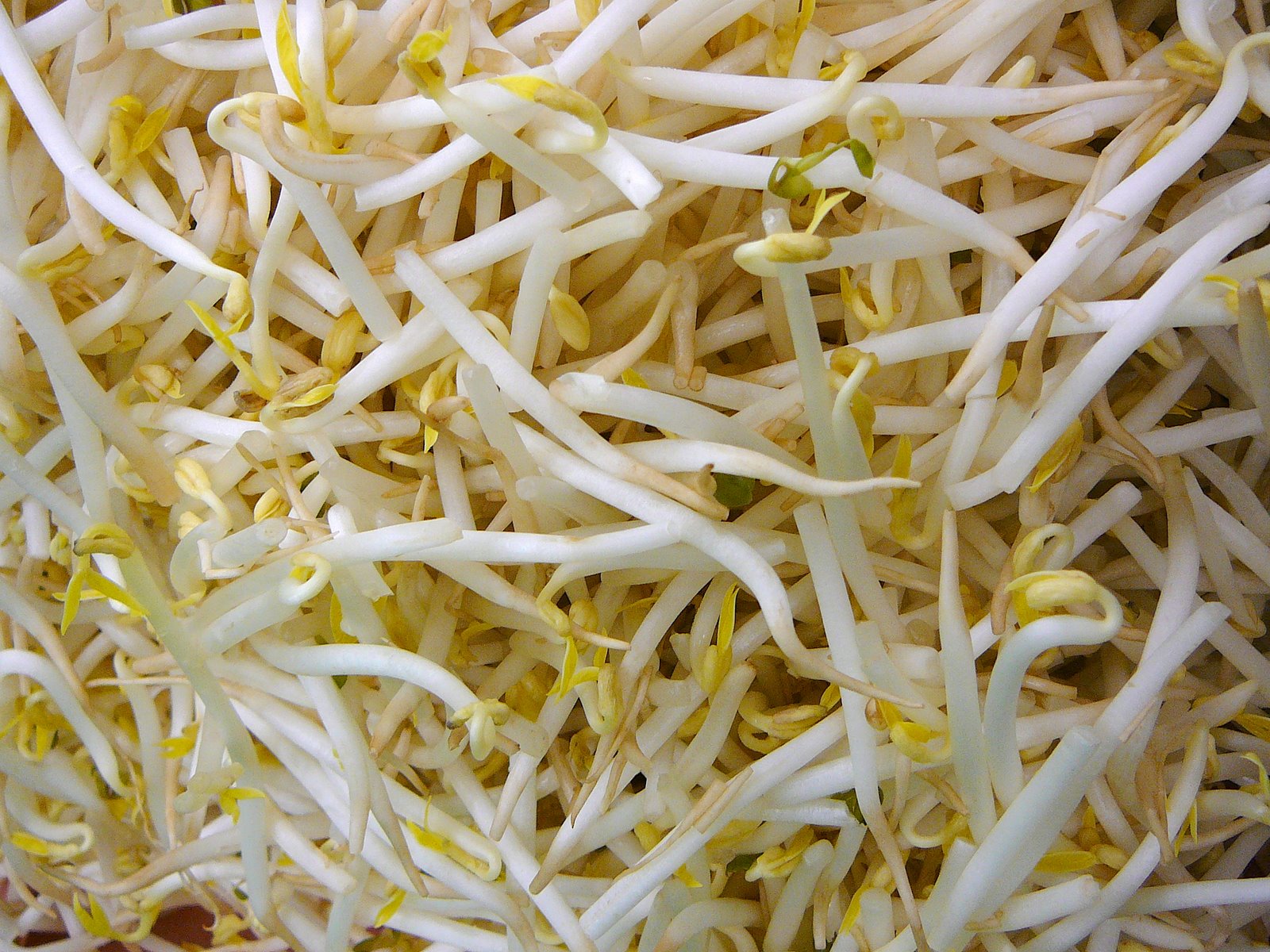
Raw sprouts are the poster child for failures in what academics call, risk communication.

I’ve been thinking about this for a long time.

About 1999, graduate student Sylvanus Thompson started working with me on risk analysis associated with sprouts. He got his degree and went on to rock-star status in the food safety world with the implementation of the red-yellow-green restaurant inspection disclosure program with Toronto Public Health, but we never published anything.

I remember frantically flying to Kansas City to hang out with this girl in Manhattan (Kansas) I’d met a couple of weeks before, in the midst of the 2005 Ontario raw sprout outbreak that sickened over 700; Jen Tryon, now with Global News, interviewed me at the airport, with me wearing a K-State hockey shirt (that’s the joke; there is no hockey at K-State, and I was still employed by Guelph; and I was going to hang out with this girl).

After the German E. coli O104 outbreak that killed 53 people last year and sickened over 4,000, along with the ridiculous public statements and blatant disregard for public safety taken by sandwich artist Jimmy John’s in the U.S., I figured we really needed to publish something.

The basic conclusions:

• raw sprouts are a well-documented source of foodborne illness;

• risk communication about raw sprouts has been inconsistent; and,

• continued outbreaks question effectiveness of risk management strategies and producer compliance.

We document at least 55 sprout-associated outbreaks occurring worldwide affecting a total of 15,233 people since 1988. A comprehensive table of sprout-related outbreaks can be found at http://bites.ksu.edu/sprouts-associated-outbreaks.

Sprouts present a unique food safety challenge compared to other fresh produce, as the sprouting process provides optimal conditions for the growth and proliferation of pathogenic bacteria. The sprout industry, regulatory agencies, and the academic community have been collaborating to improve the microbiological safety of raw sprouts, including the implementation of Good Manufacturing Practices (GMP), establishing guidelines for safe sprout production, and chemical disinfection of seed prior to sprouting. However, guidelines and best practices are only as good as their implementation. The consumption of raw sprouts is considered high-risk, especially for young, elderly and immuno-compromised persons (FDA, 2009).

Sol Erdozain, now a graduate student in psychology at Kansas State University, took the lead on this one. Kevin Allen, now a prof-type and hockey goon at the University of British Columbia (that’s blue-eyes, right) who used to take great pleasure firing pucks off my head – even though he is also a goalie – weighed in with his microbiology expertise, Katija Morley (nee Blaine) made our arguments more coherent, and I pestered everyone. Because I should have published something like this 12 years ago.

Writing is hard.

From November 2010 into 2011, an outbreak linked to raw sprouts in the U.S. and involving sandwich franchise Jimmy John’s sickened 140 people. This was the third sprout related outbreak involving this franchise, yet the owner of the Montana Jimmy John’s outlet, Dan Stevens, expressed confidence in his sprouts claiming that because the sprouts were locally grown they would not be contaminated. By the end of December 2010 a sprout supplier, Tiny Greens Farm, was implicated in the outbreak. Jimmy John’s owner, John Liautaud, responded by stating the sandwich chain would replace alfalfa sprouts with clover sprouts since they were allegedly easier to clean. However, a week earlier a separate outbreak had been identified in Washington and Oregon in which eight people were infected with Salmonella after eating sandwiches containing clover sprouts from a Jimmy John’s restaurant. This retailer was apparently not aware of the risks associated with sprouts, or even outbreaks associated with his franchisees.

In late December 2011, less than one year after making the switch to clover sprouts, Jimmy John’s was linked to another sprout related outbreak, this time it was E.coli O26 in clover sprouts. In February 2012, sandwich franchise Jimmy John’s announced they were permanently removing raw clover sprouts from their menus. As of April 2012, the outbreak had affected 29 people across 11 states. Founder and chief executive, John Liautaud, attempted to appease upset customers through Facebook stating, “a lot of folks dig my sprouts, but I will only serve the best of the best. Sprouts were inconsistent and inconsistency does not equal the best.” He also informed them the franchise was testing snow pea shoots in a Campaign, Illinois store, although there is no mention regarding the “consistency” or safety of this choice.

Despite the frequent need for sprout-based risk communication, messaging with industry and public stakeholders has been limited in effectiveness. In spite of widespread media coverage of sprout-related outbreaks, improved production guidelines, and public health enforcement actions, awareness of risk remains low. Producers, food service and government agencies need to provide consistent, evidence-based messages and, more importantly, actions. Information regarding sprout-related risks and food safety concerns should be available and accurately presented to producers, retailers and consumers in a manner that relies on scientific data and clear communications.

Erdozain, M.S., Allen, K.J., Morley, K.A. and Powell, D.A. 2012. Failures in sprouts-related risk communication. Food Control. 10.1016/j.foodcont.2012.08.022

http://www.sciencedirect.com/science/article/pii/S0956713512004707?v=s5

Abstract

Nutritional and perceived health benefits have contributed to the increasing popularity of raw sprouted seed products. In the past two decades, sprouted seeds have been a recurring food safety concern, with at least 55 documented foodborne outbreaks affecting more than 15,000 people. A compilation of selected publications was used to yield an analysis of the evolving safety and risk communication related to raw sprouts, including microbiological safety, efforts to improve production practices, and effectiveness of communication prior to, during, and after sprout-related outbreaks. Scientific investigation and media coverage of sprout-related outbreaks has led to improved production guidelines and public health enforcement actions, yet continued outbreaks call into question the effectiveness of risk management strategies and producer compliance. Raw sprouts remain a high-risk product and avoidance or thorough cooking are the only ways that consumers can reduce risk; even thorough cooking messages fail to acknowledge the risk of cross-contamination. Risk communication messages have been inconsistent over time with Canadian and U.S. governments finally aligning their messages in the past five years, telling consumers to avoid sprouts. Yet consumer and industry awareness of risk remains low. To minimize health risks linked to the consumption of sprout products, local and national public health agencies, restaurants, retailers and producers need validated, consistent and repeated risk messaging through a variety of sources.

Maybe there’s an outbreak: Health Canada details risks of eating raw sprouts

Health Canada has a habit of issuing food safety reminders about the same time an outbreak comes to public attention. The latest example was a completely useless reminder to wash produce after an E. coli O157:H7 outbreak in New Brunswick linked to Romaine lettuce from California, and just before another NB E. coli outbreak was announced.

Today, HC is “reminding Canadians that raw or undercooked sprouts should not be eaten by young children, older adults, pregnant women or those with weakened immune systems.”

Between 1995 and 2011, approximately 1,000 cases of sprout-borne illness were reported in eight outbreaks from five provinces across Canada. The largest outbreak in Canada was in 2005, when more than 648 cases of Salmonella were reported in Ontario.

Health Canada says children younger than five, older adults, pregnant women and those with weakened immune systems are particularly vulnerable and should not eat raw sprouts at all. They should also avoid eating cooked sprouts unless the sprouts have been cooked thoroughly.

This advice does not account for the risks of cross-contamination.

Bureaucracy in (non) action: lessons learned from the 2011 outbreak of E. coli O104:H4 in sprouted seeds

Considering the outrageous scale of the E. coli O104 outbreak in sprouts, the lessons learned are incredibly banal.

The Commission of the European Communities writes in a new report that from May to July 2011, a major outbreak occurred in the European Union due to contamination of sprouted seeds by Shiga toxin-producing Escherichia coli (STEC) O104:H4 with clusters in the North of Germany and in the Bordeaux region in France.

Based on the date of onset, the outbreak started in Germany at the beginning of May and reached a peak on 22 May 2011. On 22 June 2012, an increase of hemolytic-uremic syndrome (HUS) and bloody diarrhea cases was also reported in the Bordeaux region of France. A few days later the strain was identified as the same as in German outbreak.

As soon as the outbreak was notified, the German and Länder health services were mobilized, launching of alert systems at all levels (local, national, EU and international) and all parties involved collaborated intensively. The German Robert Koch Instituted reported 855 cases of HUS and 2987 cases of bloody diarrhoea (without HUS), including 53 fatalities in Germany in its final presentation and evaluation on the outbreak. An additional 54 HUS (incl. 2 deaths) and 83 diarrhoea cases were reported through the European Centre for Disease Prevention and Control (ECDC) as linked to the German cluster in other countries of Europe, Canada and the United States. The Bordeaux cluster counted for 24 cases, including 7 HUS.

The losses for farmers in the fruit & vegetable sector were estimated at least 812 Million (Mio) € in the first 2 weeks. In addition a temporary export ban of vegetables to Russia occurred, constituting an annual value of 600 Mio €.

The objective of this document is to indicate possible actions from the EU to prevent similar outbreaks or to limit their scale and to be better prepared for food-borne outbreaks in general. Actions are also needed to strengthen coordination between the health and food safety authorities in line with the "One Health" principle.

And these are the big lessons learned:

• strengthen EU capacities to ensure protection of citizens against cross border health threats;
• awareness of the need for improvement of hygiene in food of non-animal origin including primary production and import by better enforcement of existing hygiene provisions;
• enhanced preparedness through regular practical exercises involving all key players in an outbreak;
• respect of responsibilities and involvement of all partners in outbreak management;
• better co-ordinated and clear communication;
• improve tools of market intervention and product promotion to reduce reaction time to crises outbreak and thereby limit the negative economic impact on the EU sector; and,
• strengthen public-private initiatives linking producers (incl. processing, retail and trade) and citizen/consumers to increase awareness and enhance communication and knowledge.

None of these would have presented the outbreak, although may limited things. And nowhere is the probable cause addressed: that sprout seeds themselves can become contaminated.

Sprouts in Europe: agencies try to make agencies look better

The first rule of public health is, make public health look good.

That’s what I was told by a senior health type after the E. coli O157:H7 outbreak in Walkerton, Ontario in 2000 that killed seven and sickened 2,500 in a town of 5,000 (it’s in Canada).

This isn’t cynicism, it’s just something that has been repeated to me by front-line types for the past 20 years.

The European Food Safety Authority is doing some (belated) cleanup and after the E. coli O104 outbreak in sprouts last year that killed 53 and sickened 4,400.

In anything but a rapid response to a crisis, EFSA has written a report that has lots of notes about all the meetings they had, but has nothing about what they did for all those sick and dead people. Nor does it address widespread criticism at the time of the outbreak that health types were far too slow to pinpoint the source and respond.

To hammer home their role of inadequacy, EFSA published a companion piece, Risk communication: Making it clear, timely and relevant, with catchy soundbites like, “By communicating on risks in an open and transparent way based on the advice of its scientific expert panels, EFSA contributes to improving food safety in Europe and to building public confidence in the way risk is assessed. … To this end, in the last 10 years, EFSA has commissioned two Eurobarometer surveys on risk perception in the EU. The findings of the reports show that most Europeans view national and European food safety agencies as reliable sources of information on possible risks associated with food. The surveys have proved invaluable in guiding and informing EFSA’s communications.

Organizations can survey all they want to bolster their own self-opinions around the water cooler. Didn’t help contain a ridiculously large outbreak.