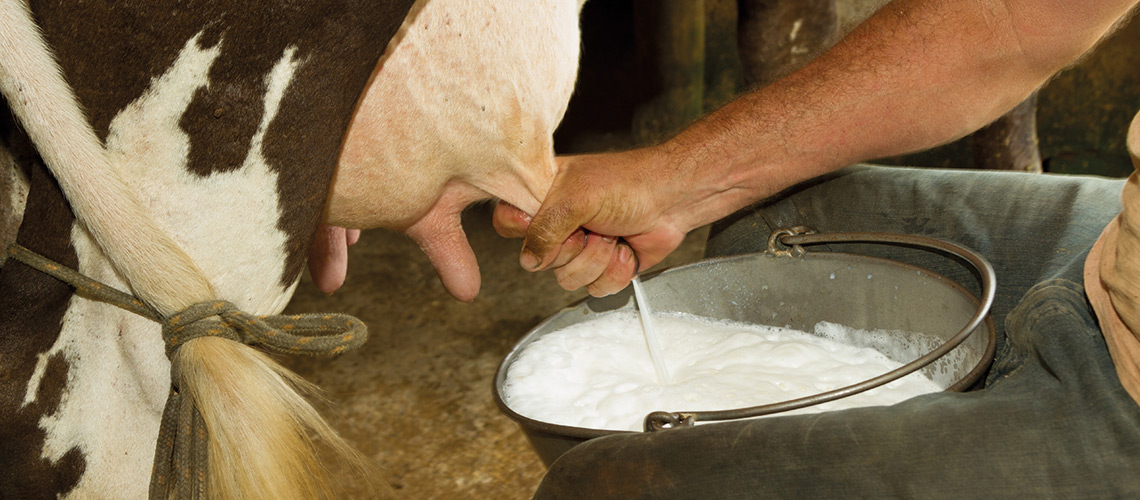
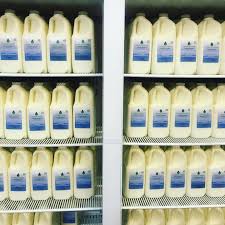
Louise Gould of the New Zealand Herald reports that Central Hawke’s Bay organic milk producer Lindsay Farm is recalling its raw unpasteurised drinking milk due to campylobacter being detected.
The Ministry for Primary Industries said campylobacter was detected as part of Lindsay Farm’s routine testing program.
The recall affects the farm’s brand Organic Raw Drinking Milk with a use-by date between March 6 and up to and including March 21, 2021.
It’s not the first time the family-owned and operated farm in Waipukurau has had to recall its products.
Last year a 6-year-old girl was hospitalised with campylobacter illness after drinking their raw milk, which prompted MPI to order a recall.
The young girl’s family publicly backed the milk in the aftermath and remain regular consumers of the product.
New Zealand Food Safety’s national food compliance services manager Melinda Sando said people with Lindsay Farm organic raw drinking milk at home should visit the MPI recalls website to check if it is among the batches of recalled product.
She advised that anyone who has any of the recalled products should dispose of them or return them to the supplier, or heat the milk at 70°C and hold at this temperature for one minute.
According to MPI campylobacter bacteria can be potentially fatal, especially for those with weak immune systems.
In late 2014, three children in the Australian state of Victoria developed hemolytic uremic syndrome linked to Shiga-toxin toxin producing E. coli in unpasteurized bath milk produced by Mountain View Dairy Farm. One child died, and two others developed cryptosporidiosis.
The Victorian government quickly banned the sale of so-called bath milk, which although labeled as not fit for human consumption, was a widely recognized way for Australian consumers to access raw milk.
What followed was a despicable whisper campaign that the child who died had an underlying medical condition, it wasn’t Shiga-toxin producing E. coli (STEC), farmers were losing access to lucrative markets – anything but the basic and sometimes deadly biology of STECs and everything involving fantasy and fairytales.
Victorian Dairy farmer Vicki Jones was told in 2014 by the coroner that raw milk was the likely cause of death of a three-year-old boy in 2014.
The milk was ‘raw’, or unpasteurised, and Ms Jones’ Mountain View Dairy Farm had been selling it as bath milk — a cosmetic product labelled ‘not fit for drinking’.
Ms Jones said she told the officer she would immediately remove the milk from the shelves of local stores.
“And he said to me, ‘No, no, no, don’t do that. You’ve done nothing wrong and all your labelling is right’.”
In hindsight, Ms Jones said this response “was really bizarre” — as was the decision to wait months before telling her about the cases.
But then the health officer told her a three-year-old boy had died after drinking the bath milk.
“It was the most devastating news that you could possibly imagine ever getting,” she said.
“I was mortified, we were doing the raw milk because people wanted it.”
Or because you contributed to promoting BS.
A Gippsland MP, the father of the child who died, and evidence presented to the coroner have all questioned how the cases were managed and suggested other contributing factors were overlooked.
Mark Wahlqvist, an Emeritus professor of medicine at Monash University and former president of the international union of nutrition sciences, said, “Raw milk, unpasteurised milk, is not safe enough to be in the public domain.”
Professor Wahlqvist said he was open to new research but at present, found campaigners for raw milk to be more than unconvincing.
“When people for conspiratorial reasons rather than scientific reasons, think that vaccination is a problem or that pasteurisation is a problem,” he said.
“We have a science communication problem in this country and it needs science leaders.”
Raw milk cheeses are commonly consumed in France and are also a common source of foodborne outbreaks (FBOs). Both a FBO surveillance system and a laboratory-based surveillance system aim to detect Salmonella outbreaks.
In early August 2018 5 familial FBOs due to Salmonella spp. were reported to a regional health authority. Investigation identified common exposure to a raw goats’ milk cheese, from which Salmonella spp. were also isolated, leading to an international product recall. Three weeks later, on 22 August, a national increase in Salmonella Newport ST118 was detected through laboratory surveillance. Concomitantly isolates from the earlier familial clusters were confirmed as S. Newport ST118. Interviews with a selection of the laboratory identified cases revealed exposure to the same cheese, including exposure to batches not included in the previous recall, leading to an expansion of the recall. The outbreak affected 153 cases, including 6 cases in Scotland. S. Newport was detected in the cheese and in milk of one of the producer’s goats.
The difference in the two alerts generated by this outbreak highlight the timeliness of the FBO system and the precision of the laboratory-based surveillance system. It is also a reminder of the risks associated with raw milk cheeses.
Outbreak of salmonella Newport associated with internationally distributed raw goats’ milk cheese, France, 2018, 04 May 2020
In December 2018, the Pennsylvania Department of Agriculture (PDA) and Pennsylvania Department of Health (PADOH) were notified of a New York patient with brucellosis caused by infection with Brucella abortus RB51, the live attenuated vaccine strain of B. abortus used to prevent brucellosis in cattle (1). Brucellosis is a serious zoonotic infection caused by the bacteria Brucella spp. The most common sign is fever, followed by osteoarticular symptoms, sweating, and constitutional symptoms (2). Without proper treatment, infection can become chronic and potentially life-threatening (2).
The patient had consumed raw (unpasteurized) milk from dairy A in Pennsylvania.* In July 2017, Texas health officials documented the first human case of domestically acquired RB51 infection associated with raw milk consumption from a Texas dairy (3). In October 2017, a second RB51 case associated with raw milk consumption was documented in New Jersey†; the milk source was not identified at the time.
To determine the RB51 source for the New York case, PDA conducted an environmental investigation at dairy A in December 2018. PDA collected individual milk samples from all cows, excluding those known not to have been vaccinated against B. abortus, and from the bulk milk tank, which included milk pooled from all cows. All milk samples underwent polymerase chain reaction (PCR) testing and culture; whole-genome sequencing (WGS) was performed on patient and milk sample isolates. PDA conducted a traceback investigation of any cow with a milk sample that tested positive for RB51. PADOH worked with the raw milk cooperative that distributed dairy A’s milk to notify potentially exposed consumers and distributed notifications through Epi-X§ to identify cases.
Dairy A sold only raw milk and did not provide RB51 vaccination to cows born there (16 of the 30-cow herd). The remaining 14 cows were born outside the dairy and had inadequate vaccination records to determine whether they had received RB51. Because these cows might have been vaccinated, milk samples were collected from them. RB51 was detected by PCR and isolated in milk samples collected from the bulk tank and a single cow (cow 122). WGS identified two distinct RB51 strains shed by cow 122: one matched the 2018 New York patient’s isolate (3 single nucleotide polymorphisms [SNPs] different) and one, unexpectedly, matched the 2017 New Jersey patient’s isolate (1 SNP different). The two different RB51 strains were also shed from different quarters of cow 122’s udder.
Traceback revealed that cow 122 had received RB51 in 2011 and was purchased by dairy A in 2016. During 2016–2018, dairy A distributed raw milk potentially contaminated with RB51 to 19 states; PADOH notified those states’ public health veterinarians. PADOH provided a letter with RB51 information and brucellosis prophylaxis recommendations to the cooperative, which they distributed to dairy A customers. No additional cases were identified. Cow 122 was excluded from milk production, and serial PCR testing of bulk milk samples were subsequently negative for RB51.
Isolation of two different RB51 strains from different quarters of a cow’s udder has not previously been reported. These infections highlight the need to prevent RB51 infections. Raw milk consumption is also associated with serious illnesses caused by other pathogens, including Campylobacter spp., Shiga toxin–producing Escherichia coli, and Salmonella spp. (4). During 2007–2012, the number of raw milk outbreaks in the United States increased; 66 (81%) of 81 reported outbreaks occurred in states where raw milk sale is legal (5). Pregnant women, children, older adults, and persons with immunocompromising conditions are at greatest risk for infection.¶
To eliminate infection risk from milkborne pathogens, including RB51, all milk should be pasteurized. Because limited information is available about intermittent or continuous RB51 shedding among dairy cows, more research is needed to more fully understand this emerging public health threat for milk consumers. States can also consider the United States Animal Health Associations’ recommendations regarding the need for RB51 vaccination in areas where B. abortus is not endemic in wildlife.
Notes from the field: Brucella abortus RB51 infections associated with consumption of raw milk from Pennsylvania—2017 and 2018, 17 April 2020
Morbidity and Mortality Weekly Report
Joann F. Gruber, PhD1,2; Alexandra Newman, DVM3; Christina Egan, PhD3; Colin Campbell, DVM4; Kristin Garafalo, MPH4; David R. Wolfgang, VMD5; Andre Weltman, MD2; Kelly E. Kline, MPH2; Sharon M. Watkins, PhD2; Suelee Robbe-Austerman, DVM, PhD6; Christine Quance6; Tyler Thacker, PhD6; Grishma Kharod, MPH1; Maria E. Negron, DVM, PhD1; Betsy Schroeder, DVM2
This review analysed outbreaks of human cryptosporidiosis due to raw milk. The objective of our study was to highlight and identify underestimated and underreported aspects of transmission of the parasite as well as the added value of genotyping Cryptosporidium isolates.
Methods
We conducted a descriptive literature review using the digital archives Pubmed and Embase. All original papers and case reports referring to outbreaks of Cryptosporidium due to unpasteurized milk were reviewed. The cross-references from these publications were also included.
Results
Outbreaks have been described in the USA, Australia, and the UK. Laboratory evidence of Cryptosporidium from milk specimens was lacking in the majority of the investigations. However, in most recent reports molecular tests on stool specimens along with epidemiological data supported that the infection was acquired through the consumption of unpasteurized milk. As the incubation period for Cryptosporidium is relatively long (days to weeks) compared with many other foodborne pathogens (hours to days), these reports often lack microbiological confirmation because, by the time the outbreak was identified, the possibly contaminated milk was not available anymore.
Conclusion
Cryptosporidiosis is generally considered a waterborne intestinal infection, but several reports on foodborne transmission (including through raw milk) have been reported in the literature. Calves are frequently infected with Cryptosporidium spp., which does not multiply in milk. However, Cryptosporidium oocysts can survive if pasteurization fails. Thus, pasteurization is essential to inactivate oocysts. Although cryptosporidiosis cases acquired from raw milk are seldom reported, the risk should not be underestimated and Cryptosporidium should be considered as a potential agent of contamination. Genotyping Cryptosporidium isolates might be a supportive tool to strengthen epidemiologic evidence as well as to estimate the burden of the disease.
A review of outbreaks of cryptosporidiosis due to unpasteurized milk, 15 April 2020
Outbreak News Today reports that since November 2019, Public Health France reports investigating 13 cases of salmonellosis caused by Salmonella enterica serotype Dublin (S. Dublin) reported by the National Reference Center (CNR) of Salmonella (Institut Pasteur) due to the fact that the strains belong to the same genomic cluster.
The outbreak has been linked to the consumption of raw milk Morbier (cheese), purchased from different brands, health officials note.
The cases are spread over 7 regions of the country. Three cases died, though its not clear if the salmonellosis attributed to the deaths.
The analysis by the Directorate General of Food (DGAL) of cheese purchases from case loyalty cards made it possible to identify that the Morbiers bought by the cases came from the same supplier.
The current human brucellosis epidemic in Ath Mansour has again claimed new victims. These are 2 citizens of Ath Vouali, hospitalized Wednesday [28 Aug 2019] at the EPH Kaci Yahia M’Chedallah. The affected subjects are a 40-year-old father and his 15-month-old son. Met in the halls of the hospital, the father indicated that he and his family have consumed raw milk from the farmer whose goats were infected almost 2 months ago.
After these 2 new victims, 6 cases of human brucellosis have been detected since last week [18-24 Aug 2019] in this commune and hospitalized at M’Chedallah hospital. In this context, we learned that a Daira commission, composed of a member of the APC executive of Ath Mansour, the subdivisionary of agriculture of Ahnif, a member of the prevention of the Ahnif EPSP and the M’Chedallah Civil Protection Unit, was set up on the instructions of the Daira Chief.’
The U.S. Centers for Disease Control and Prevention and state health officials are investigating potential exposures to Brucella strain RB51 (RB51) in 19 states, connected to consuming raw (unpasteurized) milk from Miller’s Biodiversity Farm in Quarryville, Pennsylvania. One case of RB51 infection (brucellosis) has been confirmed in New York, and an unknown number of people may have been exposed to RB51 from drinking the milk from this farm. This type of Brucella is resistant to first-line drugs and can be difficult to diagnose because of limited testing options and the fact that early brucellosis symptoms are similar to those of more common illnesses like flu.
The New York case is the third known instance of an infection with RB51 associated with consuming raw milk or raw milk products produced in the United States. The other two human cases occurred in October 2017 in New Jersey and in August 2017 in Texas. Those cases reported drinking raw milk from an online retailer and a Texas farm, respectively. In addition to these three confirmed cases, hundreds of others were potentially exposed to RB51 during these three incidents.
RB51 is a live, weakened strain used in a vaccine to protect cows against a more severe form of Brucella infection that can cause abortions in cows and severe illness in people. On rare occasions, cows vaccinated with RB51 vaccine can shed the bacteria in their milk. People who drink raw milk from cows that are shedding RB51 can develop brucellosis.
People who consumed raw milk or raw milk products from this dairy farm since January 2016 may have been exposed and should talk to their doctor.
People who are still within six months of the date they last consumed the raw milk are at an increased risk for brucellosis and should receive antibiotics to prevent an infection and symptoms, and should monitor their health for possible symptoms for six months. If symptoms develop, they should see their doctor immediately for testing.
Milk samples from Miller’s Biodiversity tested positive for RB51. A cow that tested positive for RB51 has been removed from the milking herd.
Providing consumers with recommendations on specific food safety practices may be a cost-effective policy option, acting either as a complement to or substitute for additional food safety regulations on food suppliers, but it would require a detailed understanding of consumer food safety practices.
Using data from the 2014 to 2016 American Time Use Survey–Eating and Health Module, we examine two food safety practices in which Government health and safety officials, as well as the broader food safety community, have offered unequivocal advice: meal preparers should always use a thermometer to verify that meat has reached a recommended temperature and consumers should avoid raw (unpasteurized) milk.
We found that 2 percent of at-home meal preparers in the United States served raw milk during a typical week; of which 80 percent lived with two or more people, 44 percent were married, 36 percent lived with one or more children, and 28 percent lived with at least one person age 62 or older, indicating the potential that at-risk populations are consuming raw milk.
While preparing meals with meat, poultry, or seafood, 14 percent of at-home meal preparers in the United States used a food thermometer. Meal preparers who use a food thermometer typically earned more, reported better physical health, were more likely to exercise, were more likely married, and had larger and younger households. Last, rates of food thermometer usage were higher for at-home meal preparers whose occupation was food-preparation related, suggesting food safety training or awareness at work may influence food safety behavior at home.
Consumer Food Safety Practices: Raw Milk Consumption and Food Thermometer Use
Rhodes, Taylor M., Fred Kuchler, Ket McClelland, and Karen S. Hamrick.
EIB-205, U.S. Department of Agriculture, Economic Research Service, January 2019.
Nontyphoidal Salmonella is a main cause of bacterial food-borne infection in Europe [1,2]. The majority of human infections is caused by a limited number of Salmonella serotypes among the 2,600 described to date [3,4]. Salmonella enterica serotype Dublin (S. Dublin) is particularly invasive in humans and more often leads to severe disease and higher mortality rates compared with other serotypes [4–7]. S. Dublin is host-adapted to bovines and is frequently isolated from cattle, with raw milk or raw-milk cheeses as a typical vehicle for food-borne outbreaks [8,9].
A picture taken on November 18, 2011 shows a Morbier cheese from France during the European bi-annual Eurogusto slow food festival in Tours, central France. Slow Food, whose symbol is a red snail, promotes food that is “good at a sensory level,” but also aims to educate people about traditional and wholesome means of production and defend biodiversity in the food supply. AFP PHOTO/ALAIN JOCARD / AFP PHOTO / ALAIN JOCARD
In 2012, a major S. Dublin outbreak occurred in France, with 103 cases linked to Saint-Nectaire (bovine raw-milk cheese) consumption [10,11]. In 2015, 34 S. Dublin cases were reported linked to the consumption of Reblochon (bovine raw-milk cheese) (data not shown; Santé publique France).
In France, the National Reference Center for Salmonella (NRC) and the French Agency for Food, Environmental and Occupational Health and Safety (ANSES) routinely collect and serotype human and non-human Salmonella isolates, respectively [12–14], using the Kauffmann–White–Le Minor scheme [3]. The S. Dublin isolates collected are frequently susceptible to all antibiotics and show an indistinguishable pulsed-field gel electrophoresis (PFGE) pattern. To better distinguish S. Dublin isolates, multilocus variable-number tandem repeat analysis (MLVA) has recently been used for surveillance and outbreak investigations [11,15]. Moreover, whole genome sequencing (WGS) of Salmonella has been shown to discriminate between closely related isolates of S. Dublin [16,17].
On 18 January 2016, the French NRC reported to Santé publique France (SpFrance, the French national public health agency) an excess of S. Dublin infections across the country, with 37 S. Dublin isolates identified between mid-November 2015 and mid-January 2016, compared with 10 S. Dublin isolates during the same period in the two previous years. An outbreak investigation team with experts from SpFrance, NRC, ANSES and the French Directorate General for Food (DGAL) launched extensive epidemiological, microbiological and food investigations to confirm the outbreak, identify the vehicle of transmission and propose appropriate control measures.
Disentangling a complex nationwide salmonella Dublin outbreak associated with raw-milk cheese consumption, France, 2015 to 2016,

 The Ministry for Primary Industries said campylobacter was detected as part of Lindsay Farm’s routine testing program.